Cappadocia Photography Itinerary: A 4-Day Plan for Sunrise and Sunset
Cappadocia Photography Itinerary: A 4-Day Plan for Sunrise and Sunset
Visitor-friendly planning with realistic timing, transport and local context.
Affiliate disclosure: Some booking links may earn us a small commission at no extra cost to you. How our affiliate links work.
This four-day Cappadocia photography itinerary balances famous balloon scenes with quieter geology, cave architecture and town life. It is designed for photographers who want sunrise and sunset opportunities around Goreme, Love Valley, Rose Valley, Red Valley, Uchisar and Avanos without repeating the same composition. Because balloon routes and weather change daily, the plan offers several mornings and ground-view alternatives. It also explains access, lenses, transport and respectful photography around protected sites and local communities.
Photography itinerary at a glance
| Day | Sunrise | Daylight subject | Sunset |
|---|---|---|---|
| 1 | Goreme panorama | Open Air Museum and town details | Uchisar |
| 2 | Love Valley area | Pasabag, Zelve and Avanos | Red Valley |
| 3 | Balloon flight | Underground city or villages | Rose Valley |
| 4 | Flexible weather backup | Cavusin and Ortahisar | Favourite location revisit |
Launch fields and flight paths are determined by wind, not by a fixed tourist schedule. A viewpoint that worked yesterday may produce a different composition today. Build a strong landscape plan even if balloons do not fly. Blue hour, snow, mist, rock texture and village life can create more distinctive work than repeating a crowded social-media frame.
Day 1: establish scale from Goreme and Uchisar
Sunrise in Goreme
Use an official or established viewpoint and arrive while it is still dark enough to move safely. A mid-range zoom gives flexibility when balloons drift closer or farther away; an ultra-wide lens can make them appear tiny. Keep paths open, avoid hotel roofs without permission and do not use bright lights around other photographers.
Midday interiors and details
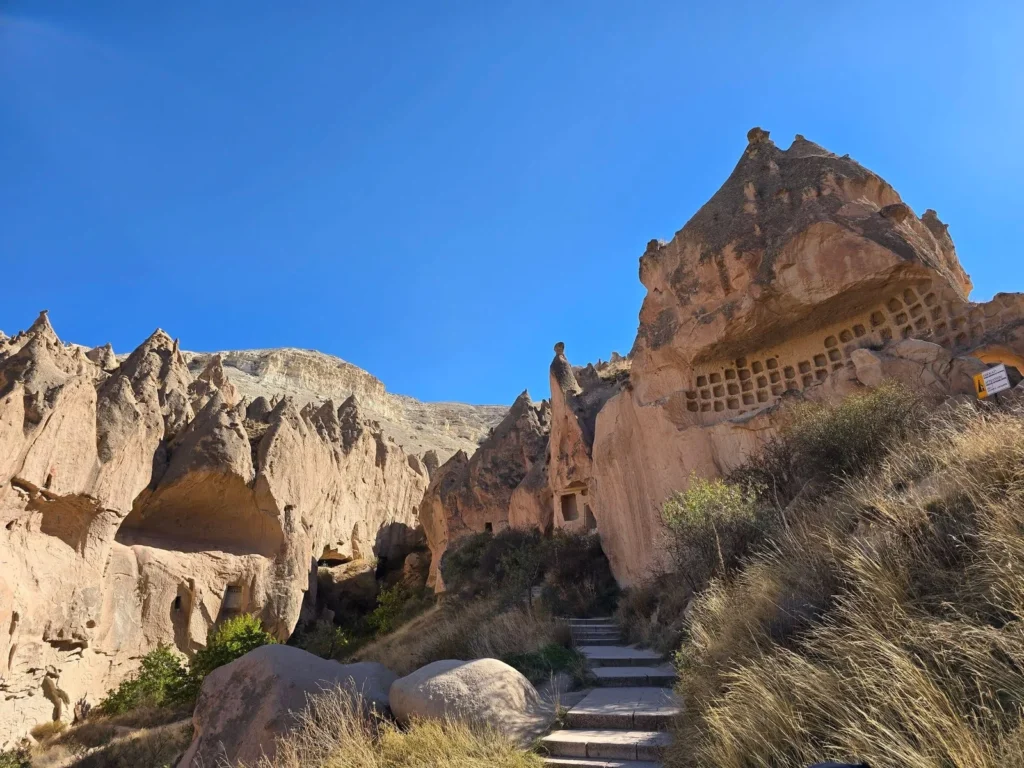
Goreme Open Air Museum is historically important, but photography restrictions apply in sensitive churches. Respect every sign and never use flash where prohibited. Outside, focus on doorways, erosion patterns and the relationship between built and carved architecture. Harsh midday light can work for graphic shadows and texture, while museums provide subject matter when the sky is flat.
Uchisar at sunset
The castle and surrounding terraces offer layered views across the region. Scout the composition before golden hour and identify a safe path back. Include streets and rock houses to give the landscape human scale. A tripod may be useful after sunset, but do not block narrow walkways. Have a taxi plan if your hotel is elsewhere.
Day 2: Love Valley, fairy chimneys and Red Valley
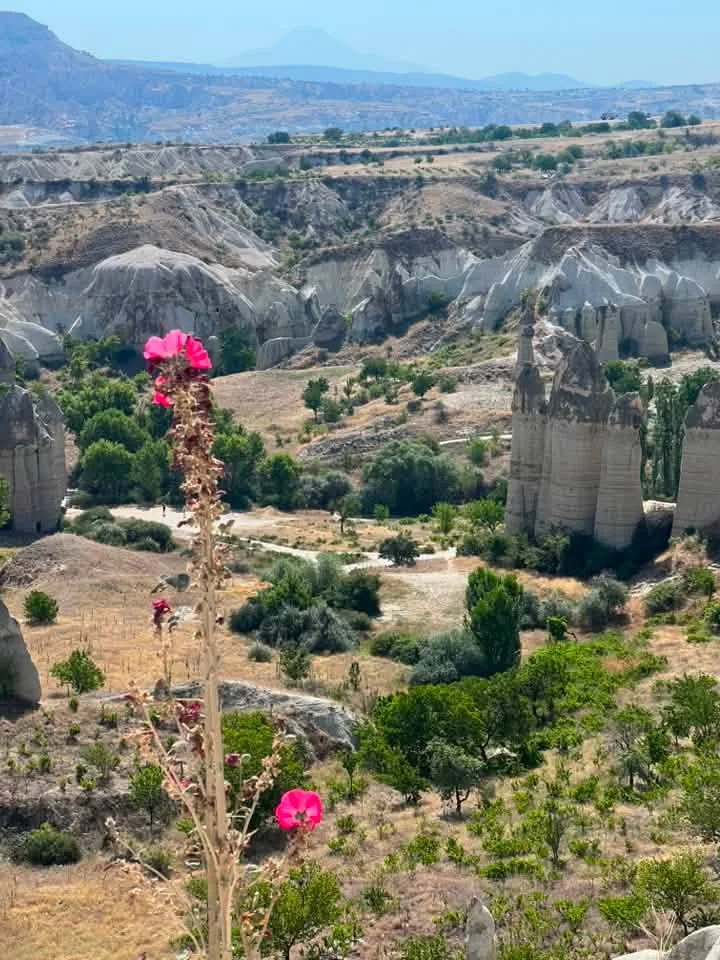
Love Valley sunrise
Choose a legal, stable viewpoint with safe vehicle access. Some tracks become muddy after rain, and informal edges can be dangerous in darkness. A longer lens compresses balloons against fairy chimneys, while a wider frame tells the geographic story. Keep distance from launch crews and never enter private land without permission.
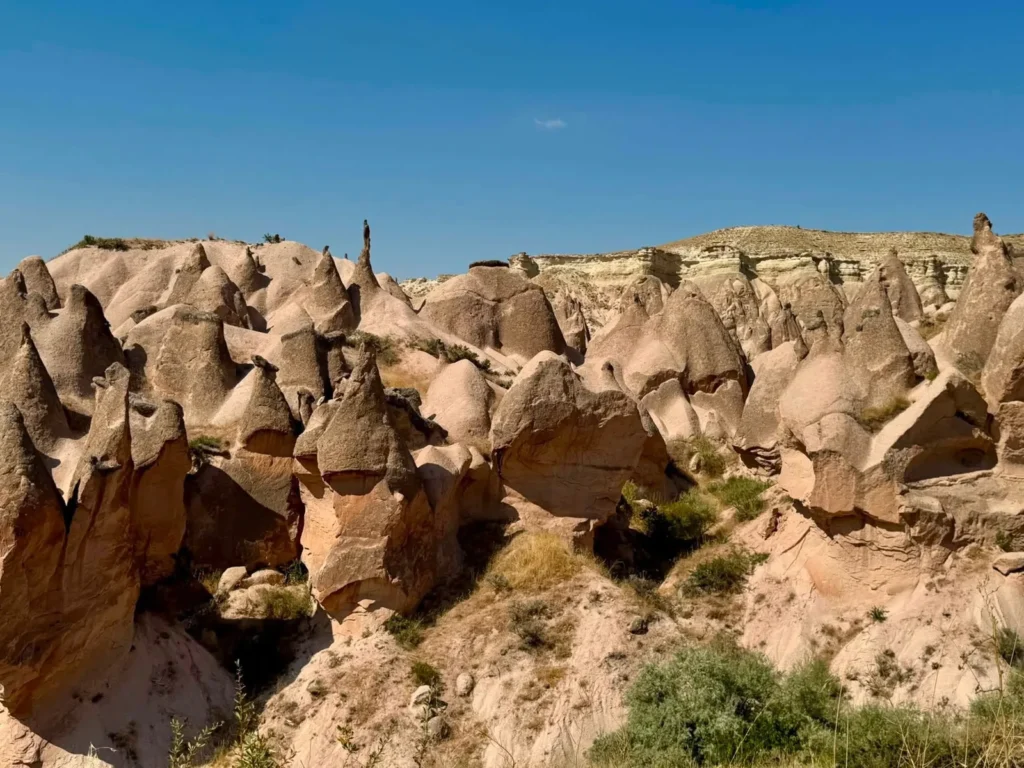
Pasabag and Zelve
Arrive before the brightest light if possible. At Pasabag, isolate cap formations or use people carefully for scale. At Zelve, layers, openings and footpaths produce stronger storytelling. Be patient with visitors rather than expecting an empty archaeological landscape. Avoid climbing eroded surfaces to improve an angle.
Avanos and Red Valley
Photograph pottery work only with clear permission, especially faces and private workshops. Hands, clay and tools can tell the story without intrusive portraits. Later, scout Red Valley for warm evening colour. Carry a headlamp for the return, but preserve night vision around others. Dust and haze can soften layers beautifully just before sunset.
Day 3: photograph from the balloon and explore culture
If flying, secure cameras with a strap and bring minimal equipment. Basket space is limited, and changing lenses near dust is awkward. A standard zoom usually covers wide landscapes and nearby balloons. Ask the pilot when it is safe to raise equipment; landing requires both hands and full attention. Do not bring a tripod into the basket.
After rest, choose an underground city if documentary history interests you, but expect low light, narrow passages and photography restrictions. Alternatively, explore Mustafapasa, Urgup or Ortahisar for stone architecture and a quieter pace. At sunset, use Rose Valley for curved formations and softer layers. The precise boundary between named valleys matters less than safe access and a strong foreground.
Day 4: weather backup and a deliberate revisit
Reserve the final morning for a second balloon attempt or a different viewpoint. Repeating sunrise from another focal length often improves a portfolio more than adding a distant attraction. Continue to Cavusin for rock-cut architecture and broad northern views, then photograph Ortahisar Castle and everyday town scenes.
Return to the strongest previous location for sunset. Light, clouds and your understanding will be different. Use the final frame to complete a visual sequence: wide establishing view, medium environmental image, architectural detail and human moment captured with consent. A coherent story has more value than fifty unrelated viewpoints.
Seasonal light and weather
Spring brings greener valley floors and changeable skies. Summer offers early sunrise, strong light and heat haze; scout before dawn and rest at midday. Autumn often provides comfortable walking and warm vegetation tones. Winter can produce snow and exceptional contrast, but trails, stairs and roads may be icy. Balloon cancellations are possible in every season because safe wind matters more than a clear-looking sky.
Sunrise time changes through the year. Check a reliable weather and sun-position app shortly before the visit, then confirm access locally. Cloud forecasts, wind at ground level and flight approval are separate things. Never promise a client or partner a balloon composition on one fixed morning.
Photography gear and field practice
- One wide-to-standard zoom for landscapes and balloon baskets
- One telephoto zoom for compressed valley layers
- Spare batteries kept warm in cold weather
- Lens cloth and blower for dust
- Comfortable shoes, water, headlamp and offline map
- Small tripod where permitted, without blocking paths
- Rain and dust protection for the bag
Drone rules, protected zones and flight restrictions can change. Obtain current permission rather than copying another traveller. Respect hotel guests when photographing terraces. Ask before photographing people closely, and never present staged costumes as documentary local life without context.
Practical planning before you follow this itinerary
Put the balloon flight on your first available morning
Balloon flights depend on wind and visibility, and cancellations can happen in every season. Book the flight for the first morning of your stay rather than the last. If aviation authorities cancel operations, you then have another morning available. Do not schedule a non-refundable airport transfer immediately after the expected landing time. Pickup, briefing, inflation, the flight and return transfer occupy much more time than the hour spent in the air.
Choose one base instead of changing hotels
For a short visit, changing towns usually costs more time than it saves. Goreme is convenient for walking, restaurants and tour pickups. Uchisar suits travellers who value quiet evenings and panoramic hotels. Urgup offers a more lived-in town atmosphere, while Avanos is appealing for pottery and the river. Choose the atmosphere that fits you, then use tours, taxis or a rental car for day trips. Always ask whether a hotel has steps, vehicle access, heating or air conditioning, because cave-room comfort varies.
Allow for real travel time
Cappadocia looks compact on a map, but the underground cities and Ihlara Valley are far from the central villages. Roads, photo stops, ticket queues and lunch make days longer. Group nearby sights rather than crossing the region repeatedly. Leave one flexible block for weather, tiredness or a place you unexpectedly love. A good itinerary is a decision guide, not a race to collect names.
Book inclusions, not just a tour colour
Red, Green and Blue Tour labels are useful shorthand, but routes differ between operators. Read the actual stops, group size, language, pickup area, lunch terms and entrance-fee policy. A low headline price can cost more after tickets. A private tour is useful when a group wants a slower pace, photography stops or an accessible route; a small-group tour usually offers better value for one or two visitors.
Food, clothing and daily rhythm
Start early, but do not turn every meal into a rushed stop. Try testi kebab, manti, gozleme, lentil soup and local wines or grape juice. Reserve a terrace dinner if the view matters, especially on busy weekends. For daytime sightseeing, carry water and a small snack because valley cafes can be seasonal. Dress in layers: sunrise can feel cold even when the afternoon is warm. Shoes with grip are more useful than fashionable trainers on loose tuff, stone steps and dusty paths.
Religious and historic interiors deserve respectful behaviour. Do not touch frescoes, enter closed cave rooms or climb fragile formations for photographs. Drone restrictions and protected-site rules may apply, so check locally before flying. Cappadocia is beautiful because its landscape and heritage are vulnerable; a responsible itinerary stays on durable paths and follows signs.
Transport choices
Pre-book an airport shuttle or private transfer from Kayseri or Nevsehir Airport and send the company your flight number and hotel. Inside the region, walking works in town and on selected valleys, but it cannot connect every attraction efficiently. Taxis are helpful for one-way hikes when the return has been arranged. A guided route is simplest for an underground city and Ihlara Valley. A rental car gives flexibility for villages and photography, although the driver must manage navigation, parking and winter road conditions.
Compare Cappadocia tours and transfers
Use the itinerary first, then compare balloon flights, airport transfers, day tours and sunset activities by route, inclusions, recent reviews and cancellation terms.
Compare Cappadocia activities ->
Affiliate disclosure: I may earn a commission if you book through this link, at no extra cost to you.
Cappadocia photography FAQ
Where is the best balloon viewpoint?
There is no single guaranteed spot because winds change. Goreme and Love Valley viewpoints are popular; scout safe access and keep alternatives.
Which lens is best?
A mid-range zoom is most versatile. Add a telephoto for balloon compression and distant layers if carrying weight is comfortable.
Can I use a tripod?
Often at outdoor viewpoints when it does not obstruct others, but individual sites may have rules. It is not appropriate in a balloon basket.
Can I fly a drone?
Do not assume so. Aviation, protected-area and local restrictions apply, particularly around balloons. Seek current official permission.
Is sunrise or sunset better?
Sunrise offers balloons when flights operate; sunset often gives warmer valley colour and a more predictable shooting schedule. Plan both.
Do I need a car?
A car or private driver helps with pre-dawn viewpoints, but a central base plus arranged taxis can work. Never rely on finding a taxi at a remote trail exit.