Goreme Open Air Museum Guide: Churches, Tickets, Timing and Visitor Tips
Goreme Open Air Museum Guide: Churches, Tickets, Timing and Visitor Tips
Practical attraction advice with transport, timing and visitor context.
Affiliate disclosure: Some booking links may earn us a small commission at no extra cost to you. How our affiliate links work.
Goreme Open Air Museum is Cappadocia’s essential rock-cut heritage site and one of the best first stops for understanding the region. Its churches, chapels, monastic spaces and frescoes show how communities used volcanic rock for worship and daily life. Visit near opening for cooler paths and quieter interiors, allow about two hours, and check whether the Dark Church needs a separate ticket. The site is outdoors between enclosed churches, so footwear and weather still matter.
Quick visitor overview
| Question | Practical answer |
|---|---|
| Best for | First-time visitors, history, art and architecture |
| Time needed | About 1.5-3 hours depending on interest and queues |
| Best time | Near opening or a cooler late visit when available |
| Terrain | Outdoor slopes, stone steps and compact interiors |
| Nearby | Tokali Church, Goreme, Zemi Valley and viewpoints |
Why the museum matters
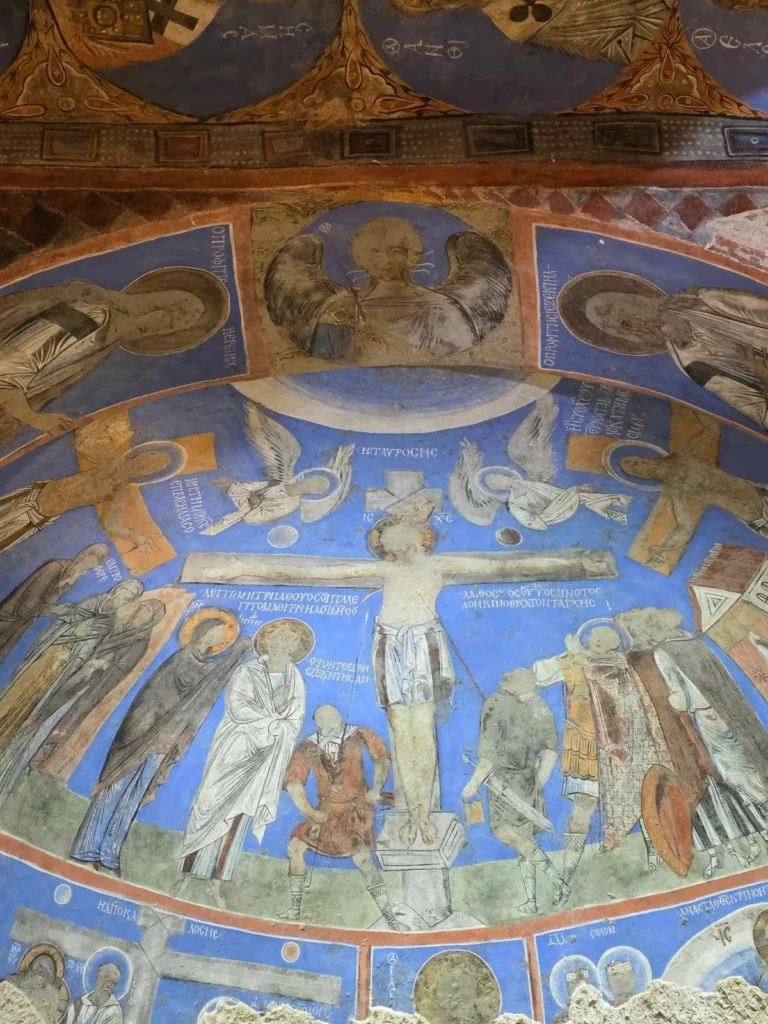
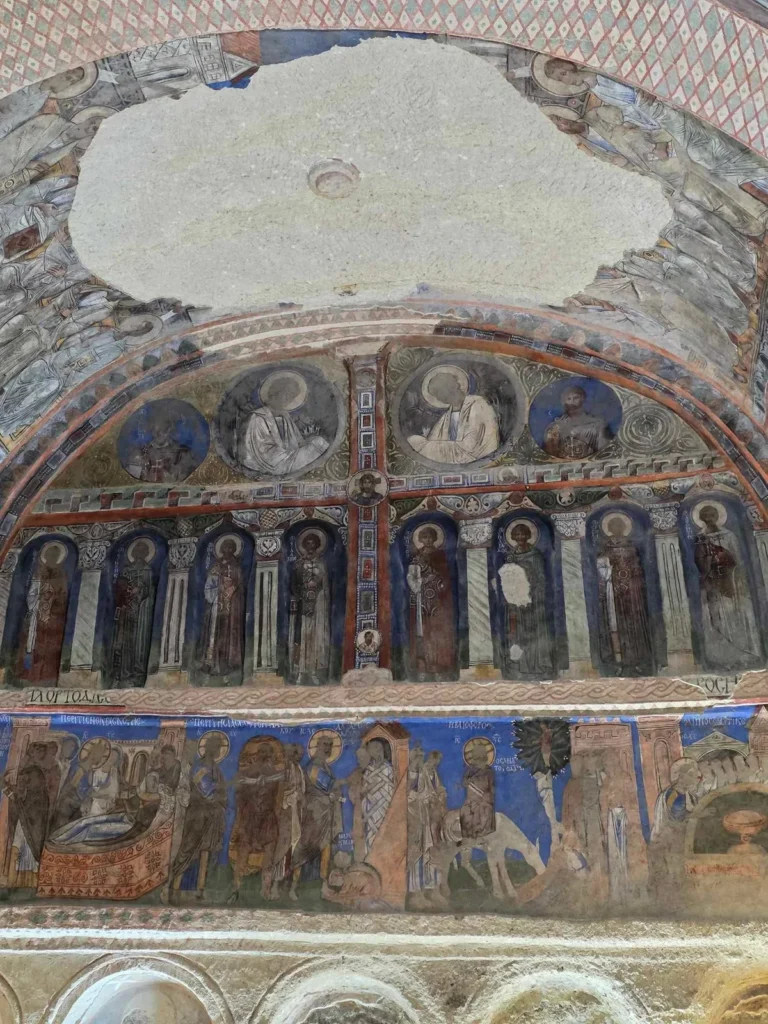
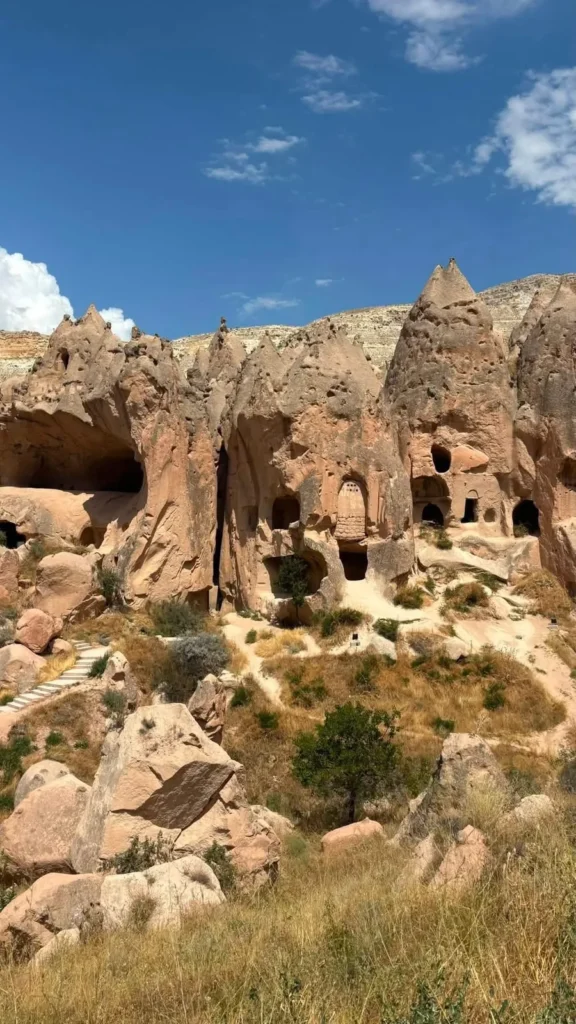
The official museum description identifies Goreme as a major monastic landscape used intensively from the fourth to thirteenth centuries. Churches, chapels, dining spaces and living areas were carved into rock blocks across a valley. Early geometric decoration and later scenes from Christian scripture reveal changing artistic approaches.
The value is not that every cave looks dramatic. It is the concentration of architecture, painting and communal spaces within one walkable site. A guide or audio guide helps visitors understand why church plans, burial spaces and painted programmes differ.
Important churches and spaces
Elmali Church
Look for the compact cross-in-square design and painted narrative scenes. Move slowly because small interiors can become crowded. Let groups exit before entering rather than pressing against walls.
Saint Barbara and Yilanli churches
These spaces help compare symbolic decoration and figural painting. A short explanation of the names and scenes is more useful than rushing to photograph them. Follow current interior restrictions.
Carikli Church
The church adds another variation in plan and fresco programme. Notice how architecture was carved rather than assembled from masonry blocks.
Dark Church
Karanlik Kilise is particularly valued for preserved frescoes associated with its limited natural light. The official Museum Card information states that Dark Church access can require a separate ticket even where a museum card covers the main site. Check current rules at the ticket office.
Tokali Church
Tokali is near the main museum complex and deserves time for its larger painted programme. Ask whether your ticket and route include it, and do not leave it as a rushed afterthought.
Best route through the site
Begin with the orientation material, then move through the lower and central spaces before queues build. If Dark Church matters most, ask staff about the best sequence. Keep one eye on the path rather than walking while looking upward. Finish with Tokali or a nearby lunch in Goreme.
Should you hire a guide?
A guide adds value when you want to understand theology, chronology, painting technique and monastic life. Without context, the visit can become a sequence of small caves. Independent visitors should use the official descriptions or audio guidance and focus on a manageable number of churches.
How to get there
The museum lies outside central Goreme along the access road. Active visitors can walk, but traffic, heat and the return incline matter. A short taxi is easy. Many Red Tour routes include the museum or another open-air site, so verify the itinerary rather than assuming.
What to combine with the museum
Pair it with Goreme town and one central viewpoint for a gentle day. Strong walkers can add a suitable Zemi Valley section. Do not pair it with both a full Green Tour and a distant sunset. The churches deserve attention, and visual fatigue is real.
Planning your visit
Check current opening times, ticket terms and temporary closures on the official museum or municipality website shortly before travelling. Seasonal schedules change and a listing copied months earlier can be wrong. Arrive near opening for important museums, or use late afternoon for outdoor viewpoints when heat and crowds soften. Never build a tight airport connection around an attraction visit.
Wear closed shoes with grip. Cappadocia’s volcanic tuff creates loose dust, irregular stone steps and exposed edges. Carry water and sun protection in warm months, and layers plus ice awareness in winter. Historic caves are not conventional modern buildings; visitors may encounter low openings, narrow passages and limited railings.
Getting there and getting around
Goreme, Uchisar, Urgup, Avanos and the southern underground-city area are spread across the region. Walking is suitable within towns and on planned valleys, but not for connecting every major attraction. Taxis work for a single stop or one-way hike when return is arranged. A rental car gives flexibility, while a guided Red, Green or private tour combines transport with explanation.
Ask a driver to agree on pickup time and place before entering a remote trail. Mobile reception may fail at valley exits. If using a group tour, read the exact stops, guide language, entrance inclusions and walking level; colour names alone do not guarantee a route.
How long should you allow?
Add time for parking, ticket queues, orientation, photography and the walk back to transport. A place described as a one-hour stop can occupy half a day when combined with lunch and travel. Group nearby attractions: Pasabag with Zelve and Avanos; Uchisar Castle with Pigeon Valley; an underground city with a southern route; Goreme Open Air Museum with a central valley.
Photography and respectful behaviour
Follow every restriction inside churches and museums. Flash, tripods or photography can be prohibited in sensitive interiors. Do not touch frescoes, cross barriers or climb fragile formations for a photograph. Ask before taking close portraits of residents or craftspeople. Drone rules and protected zones require current permission; seeing another drone does not prove legal access.
Accessibility and family questions
Words such as easy and family-friendly are subjective. Request the number of steps, path surface, tunnel height and availability of toilets. Strollers are unsuitable for most valley trails and many rock-cut sites. Underground cities can challenge anyone with claustrophobia, heart or respiratory conditions. Castles and open-air museums involve exposed, uneven ground. Choose a panoramic alternative when the main route does not suit your body.
Weather alternatives
In summer, move outdoor visits to early morning or late afternoon. In heavy rain, avoid flood-prone valleys and slippery rock. In winter, ice can affect castle stairs, roads and shaded paths. Replace an exposed hike with a pottery workshop, town museum, underground site if access roads are safe, or a long local lunch. Weather flexibility is part of good Cappadocia planning.
How to decide whether a guide adds value
A guide is most useful where the landscape contains information that is easy to miss: fresco sequences, underground ventilation, settlement history, geology and the changing use of carved rooms. At a simple panorama, independent time may be more valuable. Use a guide for explanation and difficult transport, not merely to stand beside you while photographs are taken.
Ask whether professional guiding is included or whether the product supplies only a driver. Confirm the language and group size. A private guide benefits families, photographers and visitors who need a slower route, while a small group normally gives solo travellers and couples better value.
Food and rest near major attractions
Do not wait until everyone is exhausted to choose lunch. Goreme, Uchisar, Urgup and Avanos have the broadest restaurant choice. Remote valley cafes can be seasonal, and museum kiosks do not replace a meal. Carry water and a small snack, then plan a proper stop between physically demanding attractions.
Try regional dishes such as testi kebab, manti, lentil soup, local cheeses, grape products and pottery-cooked meals, but check preparation time. Avanos is convenient after Zelve and Pasabag; Uchisar works after Pigeon Valley; Goreme works after the Open Air Museum. A calm meal helps visitors understand town life rather than treating Cappadocia as an empty landscape.
Avoid attraction overload
Two rock-cut sites can look similar when visited too quickly. Choose one main historical place, one landscape and one town experience for a balanced day. For example, combine Goreme Open Air Museum, a short Rose Valley walk and dinner in Goreme. Another day can combine Kaymakli, a southern panorama and Ihlara.
Leave room to respond to what interests you. If frescoes are fascinating, spend longer at the museum. If enclosed tunnels are uncomfortable, leave the underground city and use the time above ground. A successful itinerary is not measured by the number of ticket stubs.
Protect the landscape
Cappadocia’s soft tuff erodes naturally and is also damaged by careless climbing. Use durable paths, take rubbish out and keep vehicles on permitted tracks. Never scratch names into rock, move stones, light fires or enter fenced spaces. Report hazards to site staff rather than trying to repair or move barriers yourself.
Residents still live and work around famous landscapes. Park without blocking homes or farm access, keep noise low before sunrise and request permission for portraits. Responsible behaviour protects both the visitor experience and the communities that maintain these places.
Compare tours that include these places
Compare current routes, pickup areas, entrance inclusions, walking level and recent verified reviews before booking.
Affiliate disclosure: I may earn a commission at no extra cost to you.
FAQ
Is the museum worth it?
Yes for first-time visitors interested in Cappadocia’s history. It provides context that improves later valley and church visits.
Is it fully indoors?
No. Visitors walk outside between rock-cut interiors, so rain, sun and ice matter.
Does Dark Church cost extra?
Official Museum Card information identifies it as a separately ticketed exception. Confirm current terms.
Can I take photographs?
Restrictions vary by interior. Follow signs and staff instructions; never use flash where prohibited.
Can children visit?
Yes with supervision, but paths, steps and quiet interiors require care.